

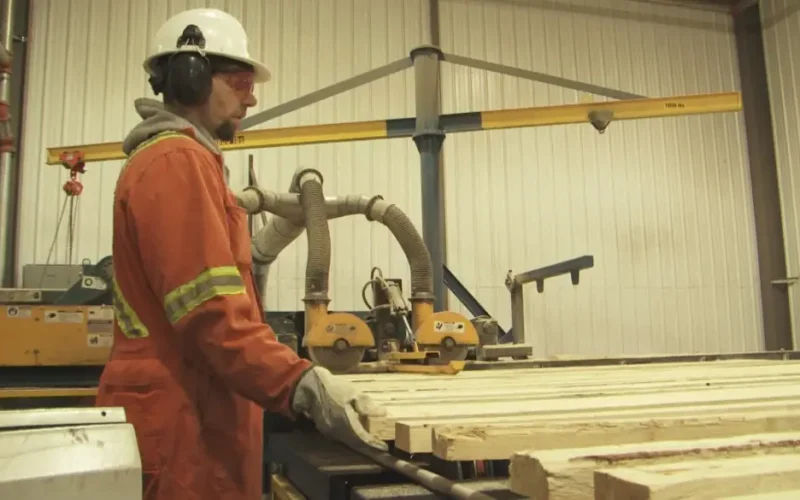
SURREY, B.C. (Richa Walia): CentreBC Leader Elenore Sturko has announced a proposal to double British Columbia’s Manufacturing Jobs Fund to $60 million annually, pledging expanded financial support for local manufacturers, wood-product businesses, food processors and companies investing in factory upgrades.
The proposed increase would be introduced under the party’s Make It in BC plan, which aims to expand the province’s manufacturing capacity, create employment opportunities and encourage more resource-based products to be processed within British Columbia.
Sturko said strengthening manufacturing and adding value to the province’s natural resources would be central to diversifying the economy. The proposed changes would extend the existing fund to additional categories of businesses, allowing more companies to seek support for expansion and production improvements.
Funding to Cover More Industries
Under the proposal, the expanded fund would continue supporting existing manufacturers while introducing new funding streams for businesses involved in four key areas:
- Prefabricated housing: Companies producing factory-built and prefabricated homes.
- Wood manufacturing: Businesses manufacturing mass timber and other finished wood products.
- Food processing: Companies processing and storing British Columbia-grown food within the province.
- Factory upgrades: Manufacturers seeking to modernise facilities and increase production capacity.
The initiative is intended to help businesses move beyond the extraction of raw materials by encouraging more processing and manufacturing to take place locally.
Sturko said the province should focus on generating greater economic value from its natural resources, with the aim of creating more jobs for British Columbians throughout the production process.
CentreBC Promises Public Tracking of Grants
The party has pledged to introduce the expanded programme through its first provincial budget if elected to government.
It has also proposed publishing details of every grant awarded through the fund, alongside information about the projects supported. A publicly accessible scorecard would be used to track how the funding is spent and what the investments deliver.
The proposed reporting system would provide residents with information about which businesses receive assistance and the outcomes associated with publicly funded projects.
However, the announcement does not specify individual grant limits, eligibility requirements, application deadlines or the criteria that would determine how funding is distributed.
Job Losses and US Tariffs Add to Industry Concerns
The announcement comes as British Columbia’s goods-producing industries face employment pressures and trade uncertainty.
According to figures cited by CentreBC, the province lost 35,800 jobs in goods-producing sectors over the past year. These industries include natural resources, manufacturing and construction.
The party also pointed to a 50 per cent US tariff affecting certain British Columbia products, including plywood, other wood products, machinery and food, as a challenge for local businesses.
The proposed fund expansion is being presented as a way to strengthen domestic production capacity and help manufacturers respond to economic pressures. Its actual impact would depend on programme design, business participation and the extent to which supported projects generate additional investment and employment.
Focus on Keeping More Production in BC
CentreBC’s Make It in BC plan centres on increasing the amount of processing and manufacturing undertaken within the province rather than exporting resources primarily in their raw form.
Sturko said British Columbia should aim to create as many local employment opportunities as possible from its forests, agricultural production and other natural resources.
The proposal places manufacturing expansion, value-added wood production, food processing and prefabricated construction at the heart of the party’s economic approach.
If implemented, the increased annual funding would represent a significant expansion of the existing Manufacturing Jobs Fund. The proposal remains a party commitment, rather than an implemented government policy, and its delivery would depend on CentreBC forming government and carrying out the announced budget changes.
